
Knowledge Center › Applications
Applications
How Do Active Air Samplers Work?
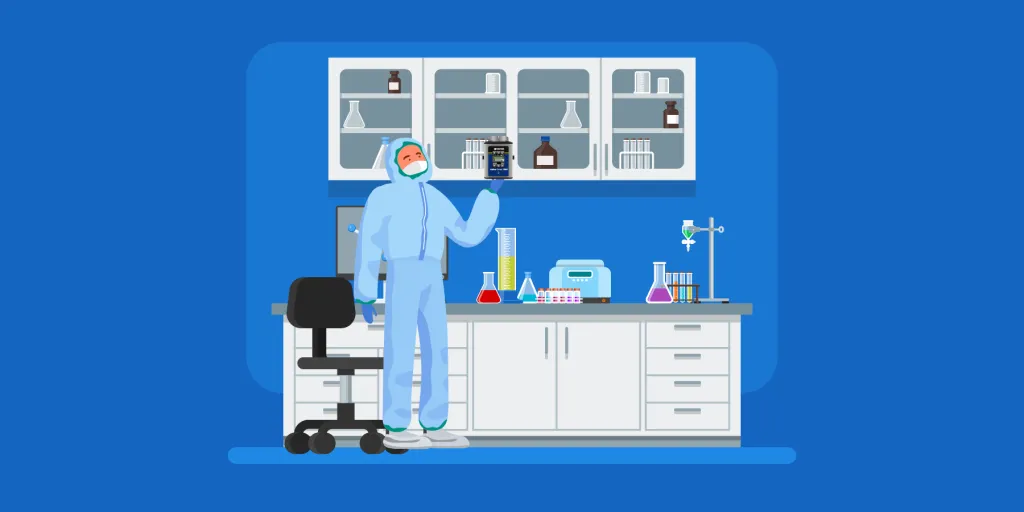
As the saying goes: "Water your garden at night, and you’ll be picking mushrooms by morning."
Thinking about this saying, you might reason that water evaporates from the soil far more slowly at night, creating the moisture mushrooms need to grow. But the saying also points to a more unsettling truth: fungi can multiply at an astonishing rate within just a few hours.
Especially in a sterile area such as a cleanroom, fungi that start out as a single microscopic cell can grow, in a very short time, to the point of causing major damage. This is one of the main reasons why the risk of viable particle contamination must be closely monitored and, if it arises, eliminated as quickly as possible.
Viable vs. Non-Viable Particles
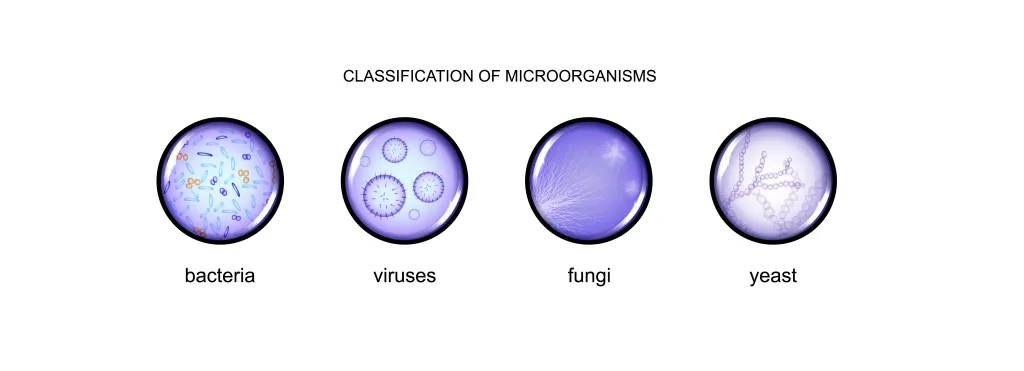
Non-viable particles consist of non-living matter such as dust, skin cells and fibers from clothing. Viable particles, on the other hand, are living microorganisms such as bacteria, fungi or mold. So what is the real difference that concerns us so much?
Viable particles can grow and change. For a cleanroom, that spells outright disaster. The best example is the fungal outbreak that occurred in a NASA cleanroom in 2018. Very high quantities of mold spores had developed throughout the cleanroom. What was truly shocking, though, were the passport-sized specimens found on a poorly maintained ventilation filter... more than 28 of them...
Given the possibility that the mold spores had damaged the extraterrestrial samples kept in the cleanroom, this was a deeply worrying situation. Because the samples might really have been contaminated, some scientists had to start years of research over again and throw away work accumulated over many years.
While every kind of contamination poses a real threat to cleanrooms, viable particle contamination is truly in a different league. The key difference is the ability of viable particles to grow. So how do you tell viable and non-viable particles apart?
Viable Particle Monitoring and the Sampling Process
A conventional particle counter will tell you how many particles are present in the environment and what size they are. But it cannot distinguish viable from non-viable particles. To understand what kind of contamination you are dealing with, you will need an active air sampler.
There are two commonly used types of air sampler: portable air samplers and continuous air samplers. They are quite similar to portable particle counters and remote particle counters. Each type has its own advantages, and they are used for different purposes. For example, portable air samplers are tailor-made for routine testing and certification based on a 1000-liter air sample. Continuous monitoring, besides being a GMP requirement, is better suited to cleanrooms where the risk of viable particle contamination is present at all times. Although remote air samplers can also be used for continuous monitoring, air samplers developed specifically for this task generally offer more benefits in continuous monitoring.
In either case, because of the way active air samplers work, we can say that they give a snapshot of exactly what is happening inside the cleanroom at that moment.
Anatomy and Function of an Active Air Sampler
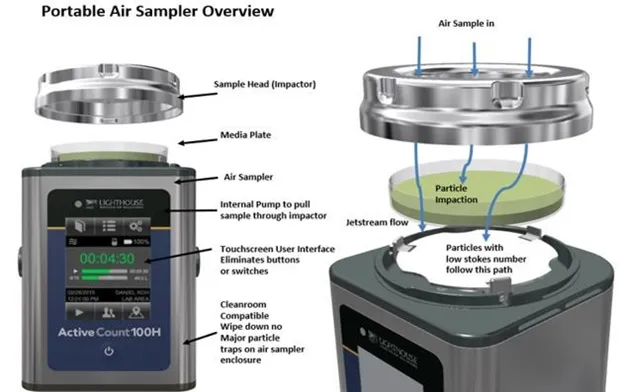
The top of an active air sampler consists of the sampling head, or impactor head, which completely covers the media plate beneath it. The body houses an internal pump that draws air in.
After taking in the air sample, the air sampler causes the particles in the sampled air to settle onto the media plate. The plate contains a growth medium that reacts to the particles and reveals what kind of contamination they cause. Settling the particles can take some time. For this reason, the active air sampler shows the current state of the room using a 1000-liter air sample. 1000 liters is the standard volume for monitoring regulations.
In some respects, an air sampler resembles a particle counter. In both, a pump forces air to interact with a component of the instrument (the growth medium in an air sampler, the laser in a particle counter) so that information can be gathered about it. The most distinctive difference between an active air sampler and a particle counter, however, is d50.
d50 is the point, determined by particle size, at which 50% of the particles in the drawn-in air pass through and 50% impact the medium and stay there. d50 is a critical characteristic of an air sampler, because it determines what size of particles your air sampler can detect. Make sure you have a d50 that suits your regulatory requirements.
Which Active Air Sampler Should You Choose?
An air sampler can determine whether your cleanroom stays safe and sterile or turns into a mushroom bed. It is one of your cleanroom’s essential tools. To choose the right one for you, there are a few things to keep in mind:
- Understand your regulatory requirements well. This will tell you whether you need an air sampler and, if so, what d50 you require.
- Make sure the air sampler you buy has a HEPA-filtered exhaust. Since only 50% of the particles stay on the medium, your air sampler will disperse the other 50%. You need this air to be exhausted through a HEPA filter so that this contamination is not released back into the environment. This is an ISO 14698-1 requirement, yet manufacturers often overlook it.
- Make sure the air sampler you buy is versatile. With a simple attachment, air samplers can also be used to sample compressed gases. For this to be possible, however, your air sampler must be built to accept the attachment. Even if you are not using compressed gases now, you may in the future. Invest in an instrument that can also meet your potential future needs.
At Lighthouse EMEA Operations, we have global expertise in clean air. The ActiveCount 100H microbial air sampler was developed to combine ease of use and high accuracy in this field.
ISO 14698-1 compliance, 8 programmable sample volumes, a removable and autoclavable petri dish holder, and more...
Contact us for more information.
ActiveCount™ Microbial Sampler — more information
Our team is here for your questions. Send us your quote or demo request.
Get a Quote